
Depending on the potential risk level and nature of the study, research projects undergo different types of ethical evaluation. Below are the three main categories:
Protocols that have human participants but do not involve vulnerable groups (IPs/ICCs, Minor, PWDs, Patients, Elderly) will not create vulnerability, with no more than negligible personally identifying and sensitive data.
Protocols that do not involve vulnerable groups (IPs/ICCs, Minor, PWDs, Patients, Elderly), will not create vulnerability, and with no more than minimal risks (Physical and Emotional Discomfort).
Protocols that have human participants involve vulnerable groups/individuals, will create vulnerability, (Undue Influence, Undue Inducement, Coercion, Response Bias, Exploitation), or have more than minimal risks (Medium to High Risks)
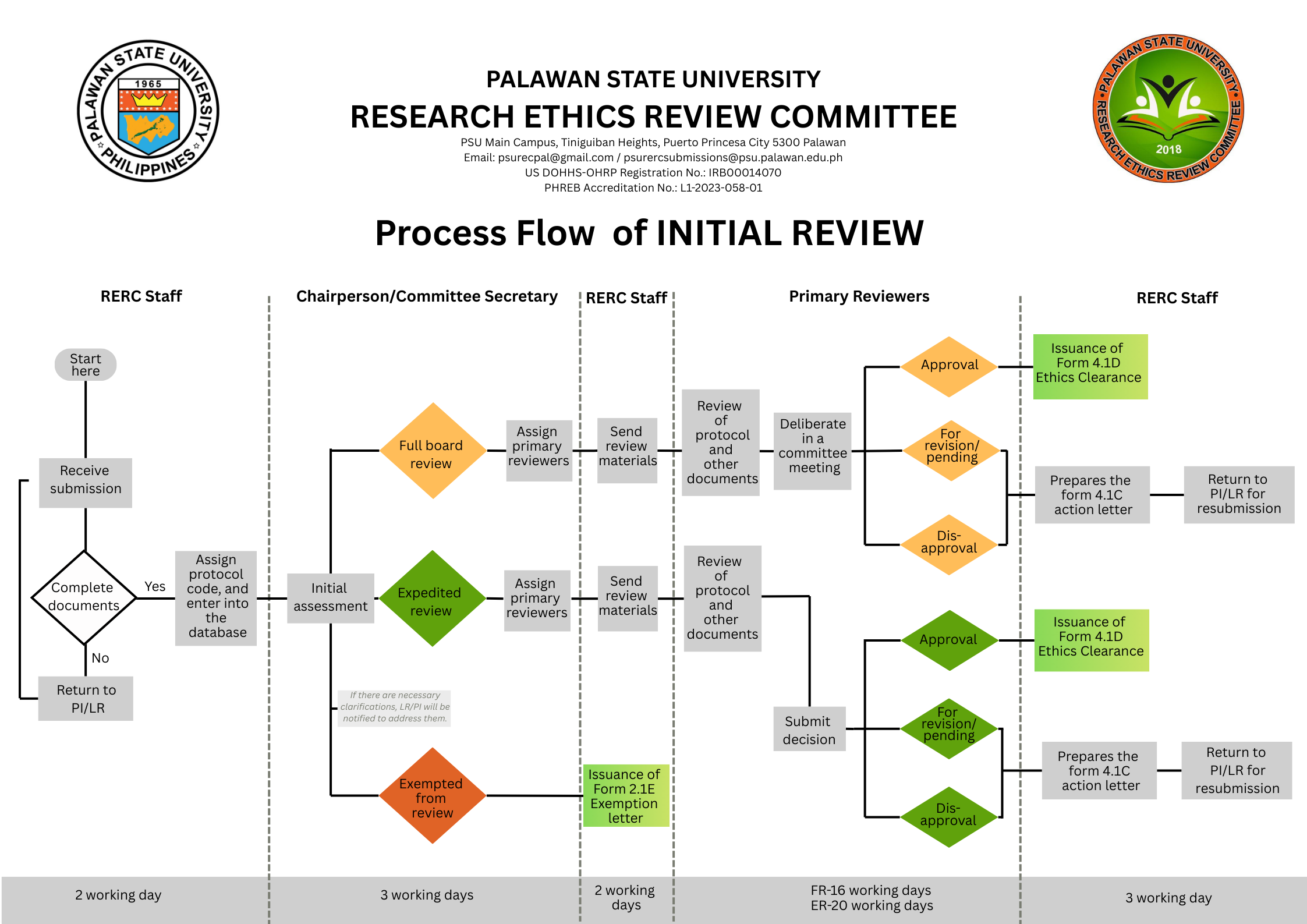
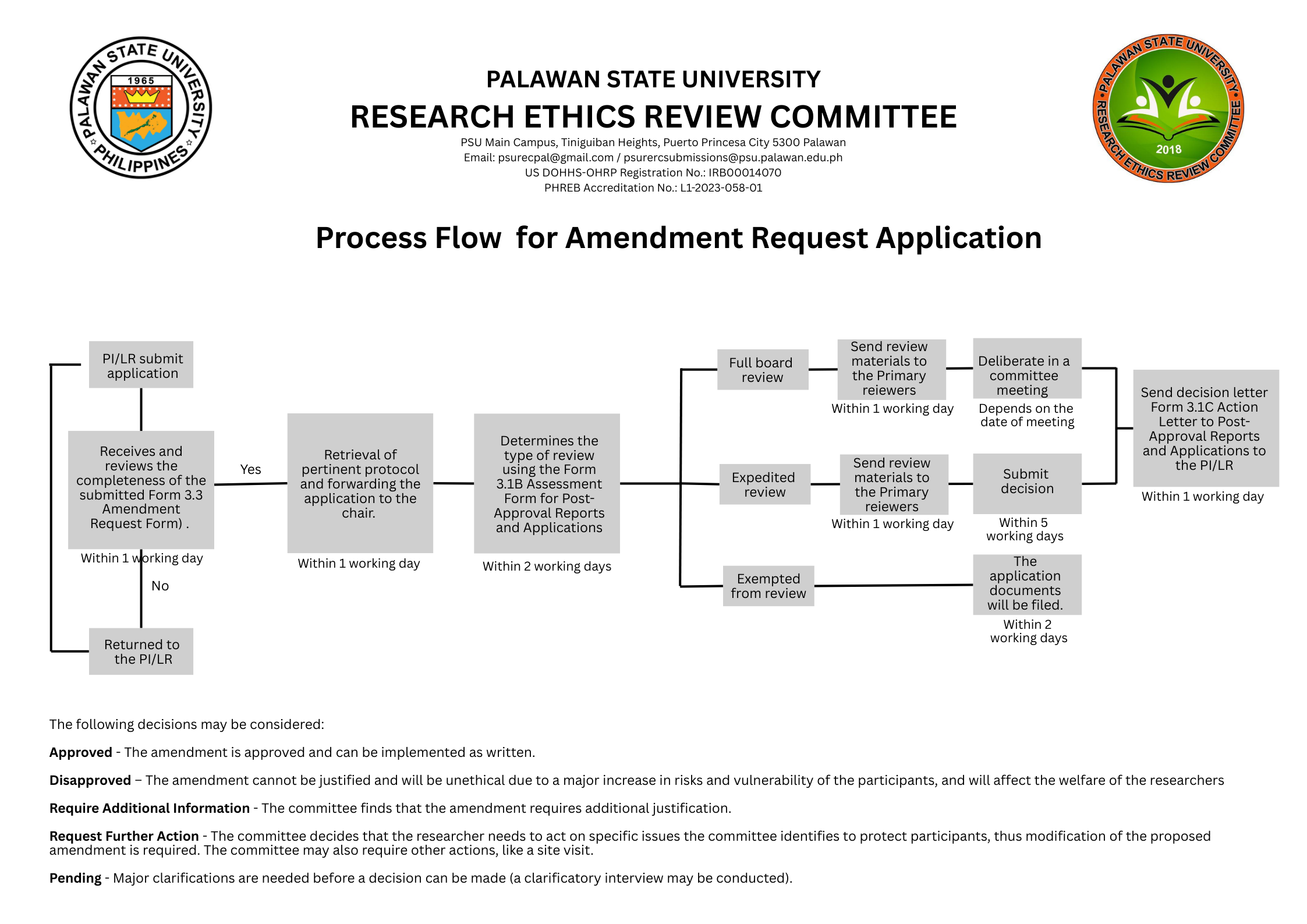
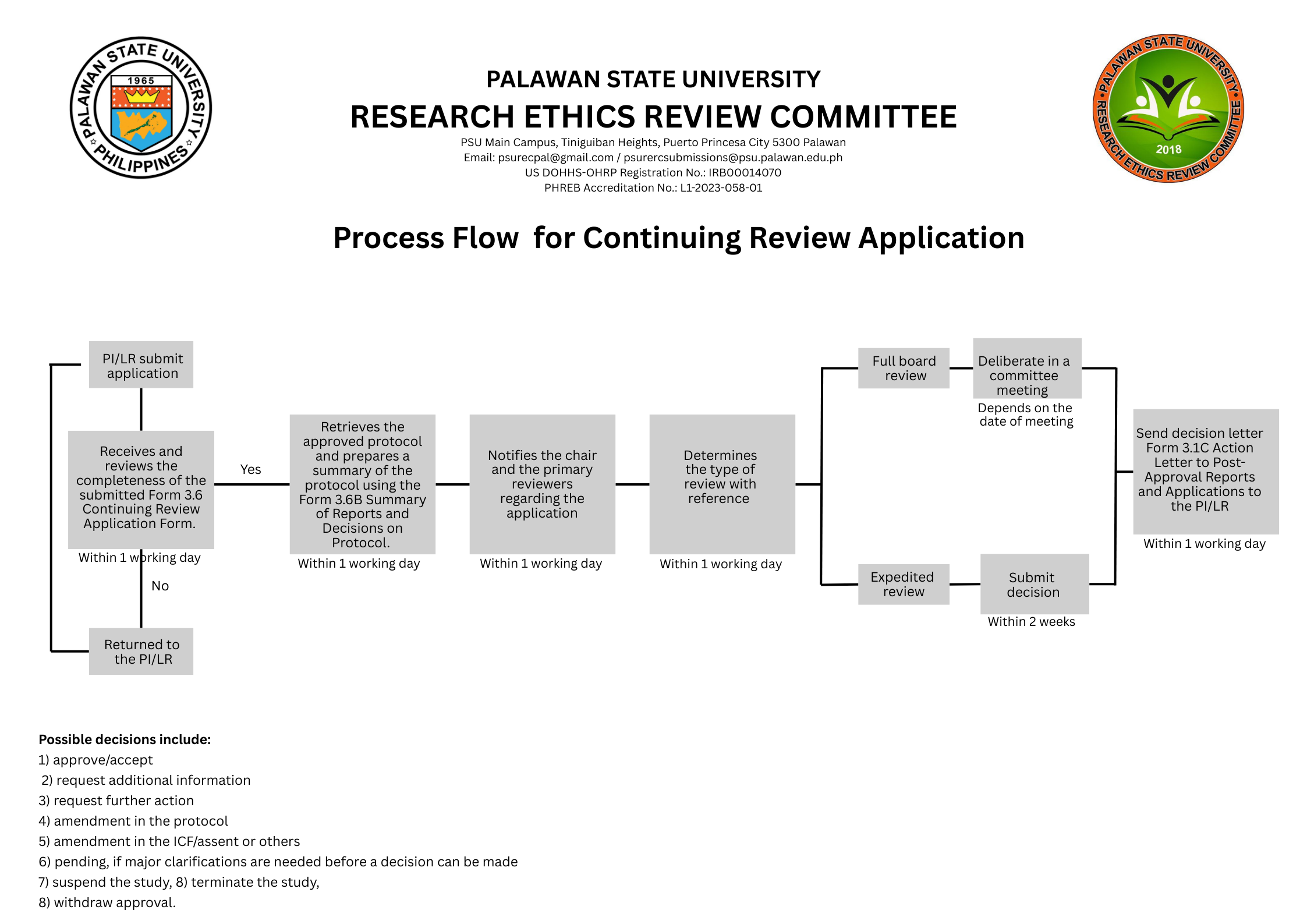
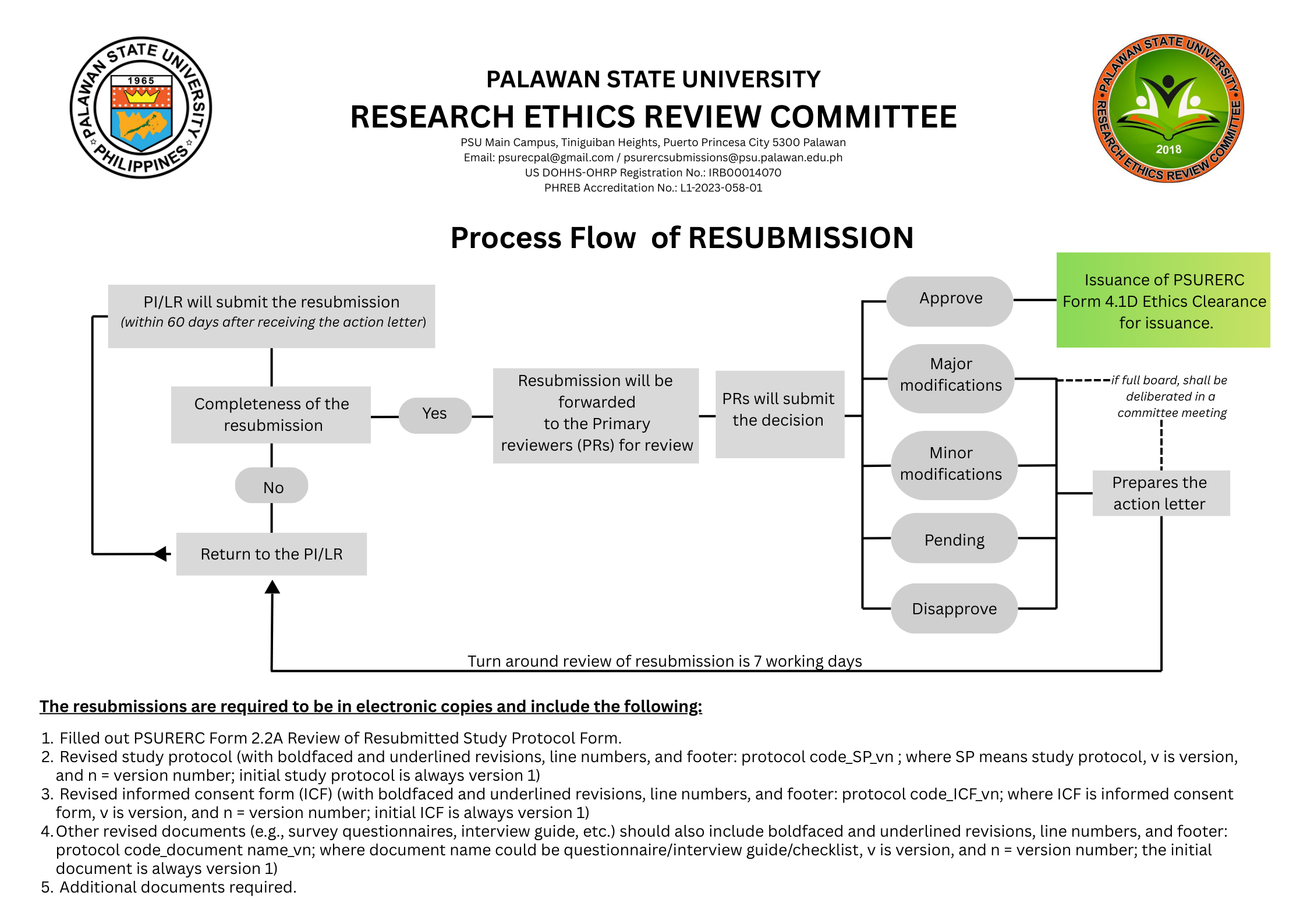
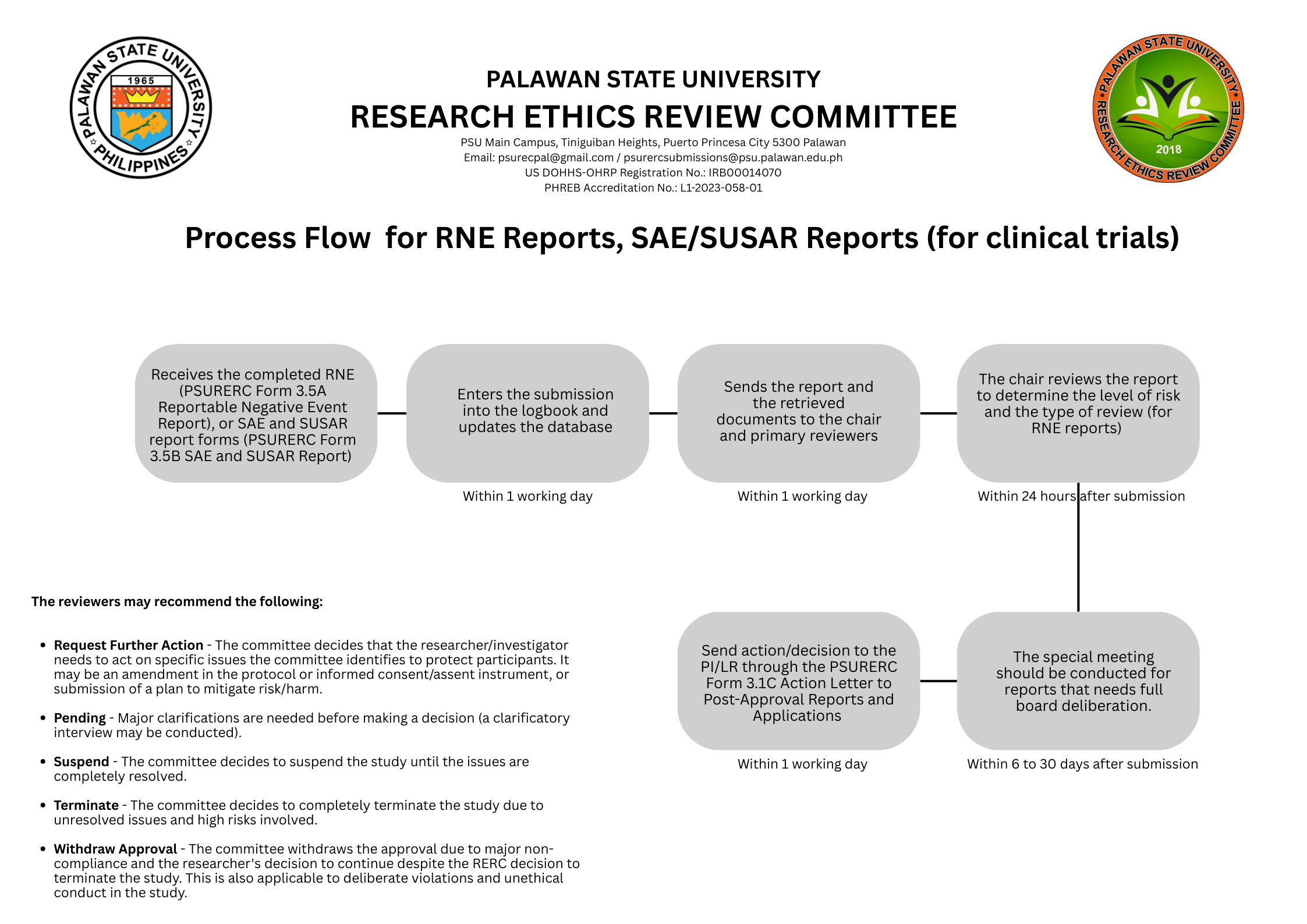
Navigate through the different application processes for research ethics review. Each diagram outlines the step-by-step procedures for various types of submissions.
Find quick answers to common questions about the research ethics review process.
To submit an ethics review application, please refer to our Process Flow diagrams above. The process typically involves preparing your research proposal, completing required forms, and submitting all documents through our designated channels. For detailed step-by-step guidance, review the Initial Review Process Flow in the carousel section.
All required documents and templates can be found in our Resources page. This includes research proposal templates, consent forms, ethics review guidelines, and other necessary documentation. Please ensure all requirements are met before submitting your application.
Review fees vary depending on the type of review required (Exempt, Expedited, or Full Board Review). For current fee structure and payment details, please contact our office directly at psurercsubmissions@psu.palawan.edu.ph or visit our Contacts page for more information.
Review timelines are indicated in our Process Flow diagrams above. The duration depends on the type of review: Exempt reviews are typically processed fastest, Expedited reviews take moderate time, while Full Board reviews require the most comprehensive evaluation period. Specific working days are detailed in each process flow diagram.
Studies that may qualify for exemption typically include research involving negligible or no risk to participants, such as studies using publicly available data, certain educational research, or research involving normal educational practices. However, exemption determination is made on a case-by-case basis. Please consult with our committee for specific guidance on your research project.